


Embassy reiterates: Overstaying J-1 may lead to deportation

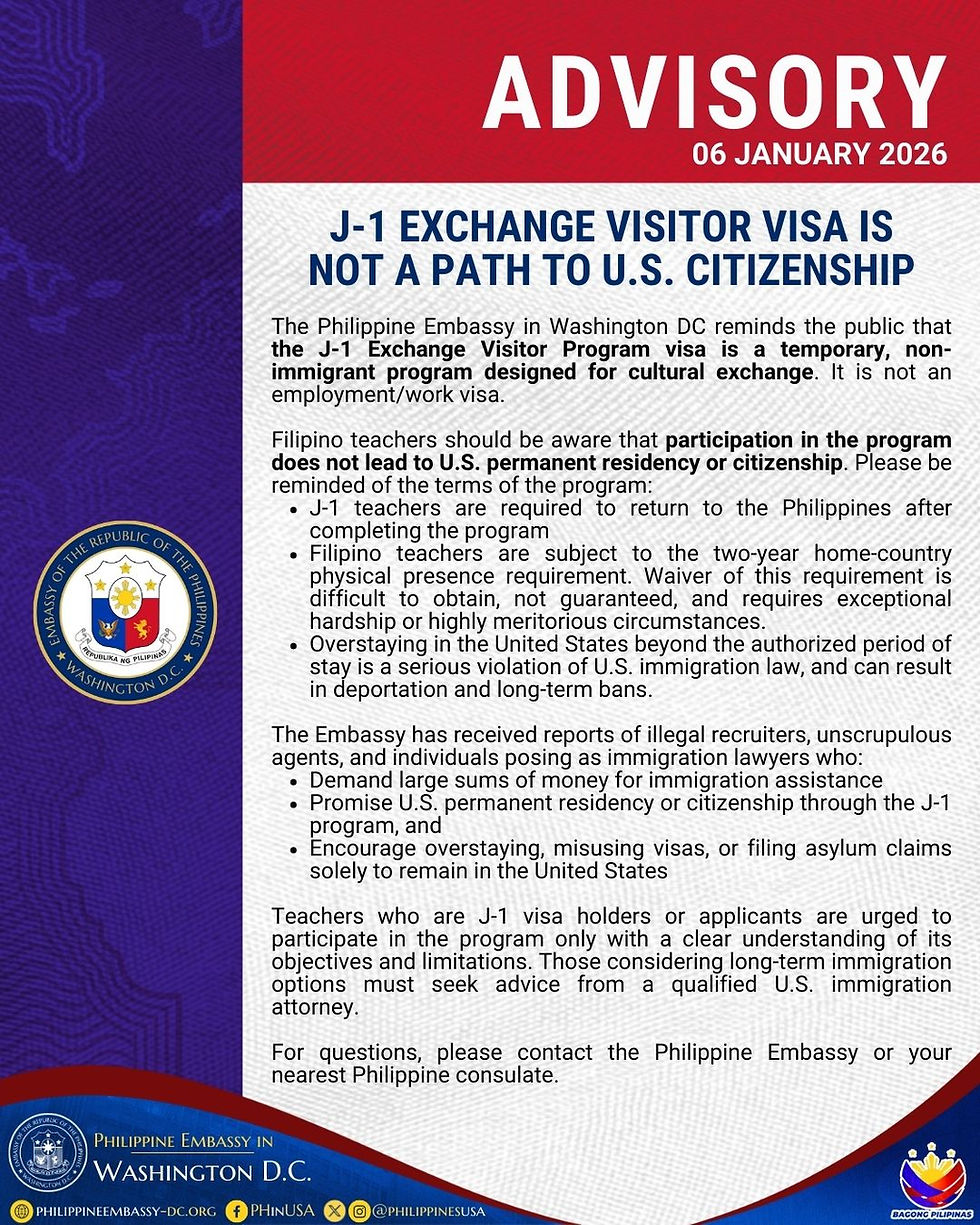
The Philippine Embassy in Washington, D.C. has reiterated its warning to Filipino teachers participating in or applying for the J-1 Exchange Visitor Program, stressing that the visa does not lead to U.S. permanent residency or citizenship.
In its advisory, the embassy reiterated that the J-1 visa is a temporary, non-immigrant program designed for cultural exchange not a work visa or a pathway to long-term stay in the United States.
Filipino teachers under the program are required to return to the Philippines after completing their exchange and remain subject to a two-year home-country physical presence requirement before they can apply for certain U.S. visas.
Officials reiterated that waivers of this requirement are difficult to obtain and not guaranteed, requiring proof of exceptional hardship or highly meritorious circumstances.
The embassy also reiterated its warning against overstaying visas, emphasizing that doing so is a serious violation of U.S. immigration law that may result in deportation and long-term bans from reentry.
In addition, the embassy raised concerns over reports of illegal recruiters and unscrupulous agents targeting Filipino teachers, who falsely promise green cards or U.S. citizenship through the J-1 program in exchange for large sums of money.
Some of these individuals reportedly encourage teachers to overstay, misuse their visas, or file asylum claims solely to remain in the United States actions that carry serious legal consequences.
The embassy reiterated its call for Filipino teachers to fully understand the limitations of the J-1 program and to seek guidance only from qualified U.S. immigration attorneys when exploring legitimate long-term immigration options.
The renewed advisory comes as more Filipino educators pursue opportunities abroad, increasing their exposure to misinformation and potential immigration scams.


Comments